
Introduction
Industrial procurement has always involved a difficult balancing act: finding the right supplier, comparing technical capabilities, managing costs, reducing risk, and making decisions quickly.
But traditional procurement processes often rely on fragmented supplier databases, spreadsheets, emails, manual quotation comparisons, and hours of online research.
Artificial Intelligence is beginning to change that.
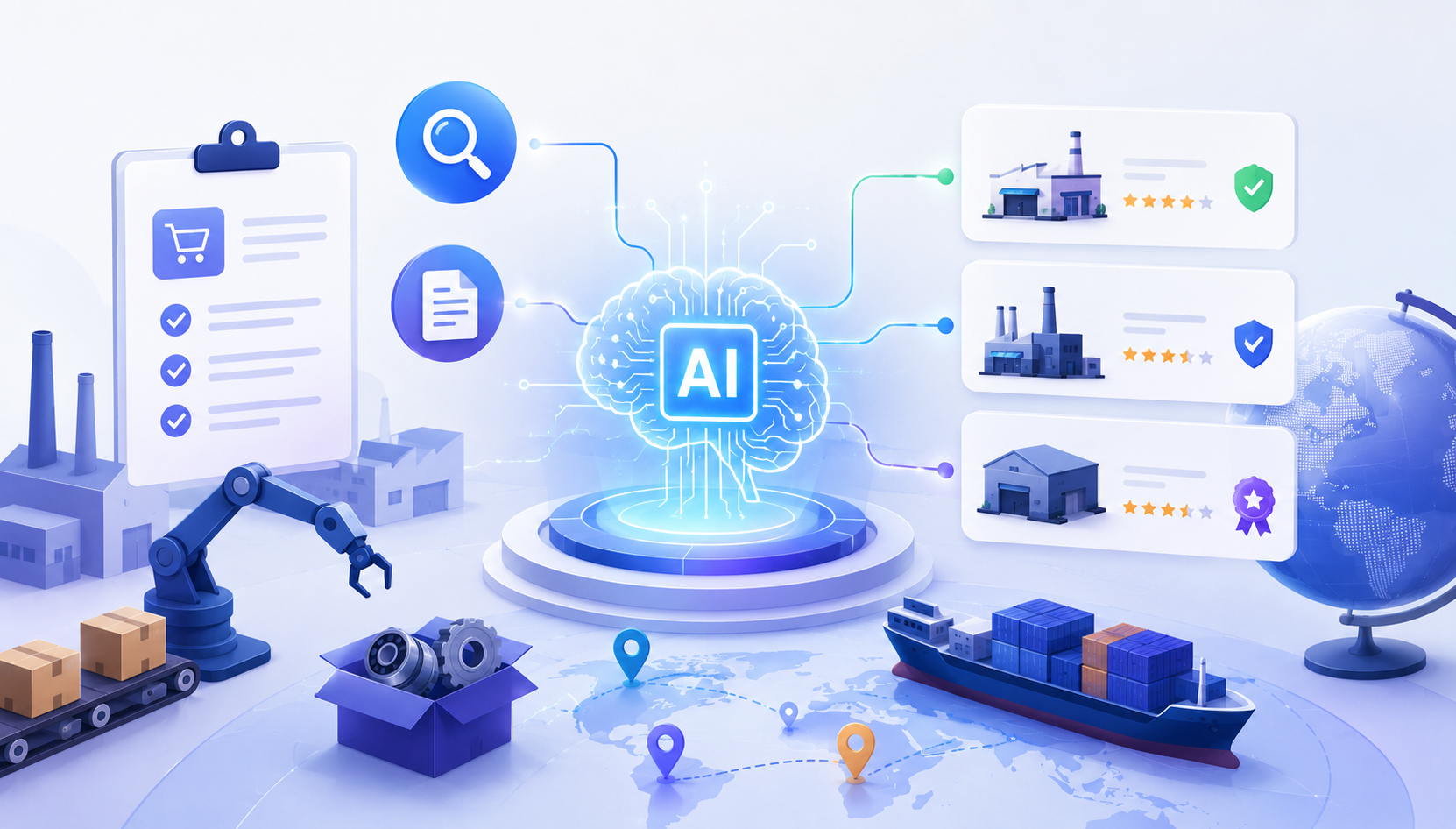
Instead of simply digitizing existing procurement processes, AI is helping sourcing teams discover, evaluate, compare, and engage suppliers more intelligently.
🔎 1. Supplier Discovery Is Becoming Smarter
Traditional supplier searches usually depend on exact keywords, existing vendor lists, or referrals.
AI enables something different: intent-based supplier discovery.
A buyer could describe a requirement such as:
“I need a manufacturer capable of producing precision stainless-steel components in low volumes with ISO certification.”
Instead of searching multiple directories manually, an AI-powered sourcing platform can interpret:
Material → Manufacturing capability → Quantity → Certification → Location → Supplier suitability
It can then identify suppliers that closely match the actual requirement.
What changes?
Traditional Search
Keywords → Browse Listings → Open Profiles → Shortlist Manually
AI-Powered Search
Describe Requirement → AI Understands Intent → Relevant Suppliers → Compare & Contact
The result is less searching and more informed decision-making.
📄 2. RFQs and Technical Documents Become Actionable Data
Industrial procurement often starts with complex information:
Bills of Materials (BOMs)
Engineering drawings
Specifications
RFQs
Product datasheets
Technical requirements
Reviewing these manually can take considerable time.
AI can help extract structured information from these documents, identify products and specifications, classify requirements, and connect them with relevant supplier capabilities.
A 200-line BOM, for example, could potentially be transformed into an organized sourcing requirement instead of being manually processed line by line.
The opportunity: Move procurement teams from document processing toward supplier decision-making.
⚖️ 3. Supplier Comparison Goes Beyond Price
The cheapest quotation is not always the best quotation.
Procurement decisions may involve:
Decision FactorWhat AI Can Help AnalyzePriceQuote and cost comparisonCapabilityMatch against technical requirementsLead TimeDelivery suitabilityCertificationsCompliance requirementsLocationLogistics and sourcing considerationsReliabilityHistorical supplier performanceRiskPotential sourcing concernsAI can bring these signals together and help buyers understand why one supplier may be better suited than another.
The buyer still makes the decision. AI helps make that decision better informed.
🤖 4. Procurement Is Moving Toward Conversational Sourcing
Imagine sourcing through a conversation:
Buyer: Find manufacturers for industrial control panels in India.
AI: Do you require specific certifications or preferred regions?
Buyer: ISO-certified suppliers, preferably Maharashtra or Gujarat.
AI: Here are matching suppliers based on your requirements.
This changes supplier discovery from navigating endless filters into a more natural buyer → AI → supplier interaction.
📊 5. AI Can Make Procurement More Predictive
The next stage goes beyond finding suppliers.
AI can potentially identify patterns across procurement data and help teams anticipate:
Supplier performance issues
Price fluctuations
Delivery risks
Alternative sourcing options
Supplier concentration risks
Opportunities for cost optimization
Instead of reacting after a supply problem occurs, procurement teams can make decisions earlier.
What Does This Mean for Buyers and Suppliers?
🛒 For Buyers
Faster discovery → Better matching → Easier comparison → Smarter sourcing decisions
Procurement teams spend less time searching and processing information and more time evaluating strategic options.
🏭 For Suppliers
Better visibility → More relevant enquiries → Improved buyer matching → New market opportunities
Rather than competing purely for visibility, suppliers can be discovered based on their actual capabilities and suitability for a buyer's requirement.
The Future: From Supplier Search to Supplier Intelligence
AI is unlikely to replace procurement professionals.
What it can replace is much of the manual work surrounding procurement: searching through hundreds of suppliers, reading repetitive documents, organizing information, and making basic comparisons.
The bigger transformation is therefore not simply:
“AI makes procurement faster.”
It is:
AI can help procurement move from searching for suppliers to intelligently identifying the right supplier for every requirement.
For industrial buyers and suppliers, that shift could fundamentally change how sourcing relationships begin.