
Introduction
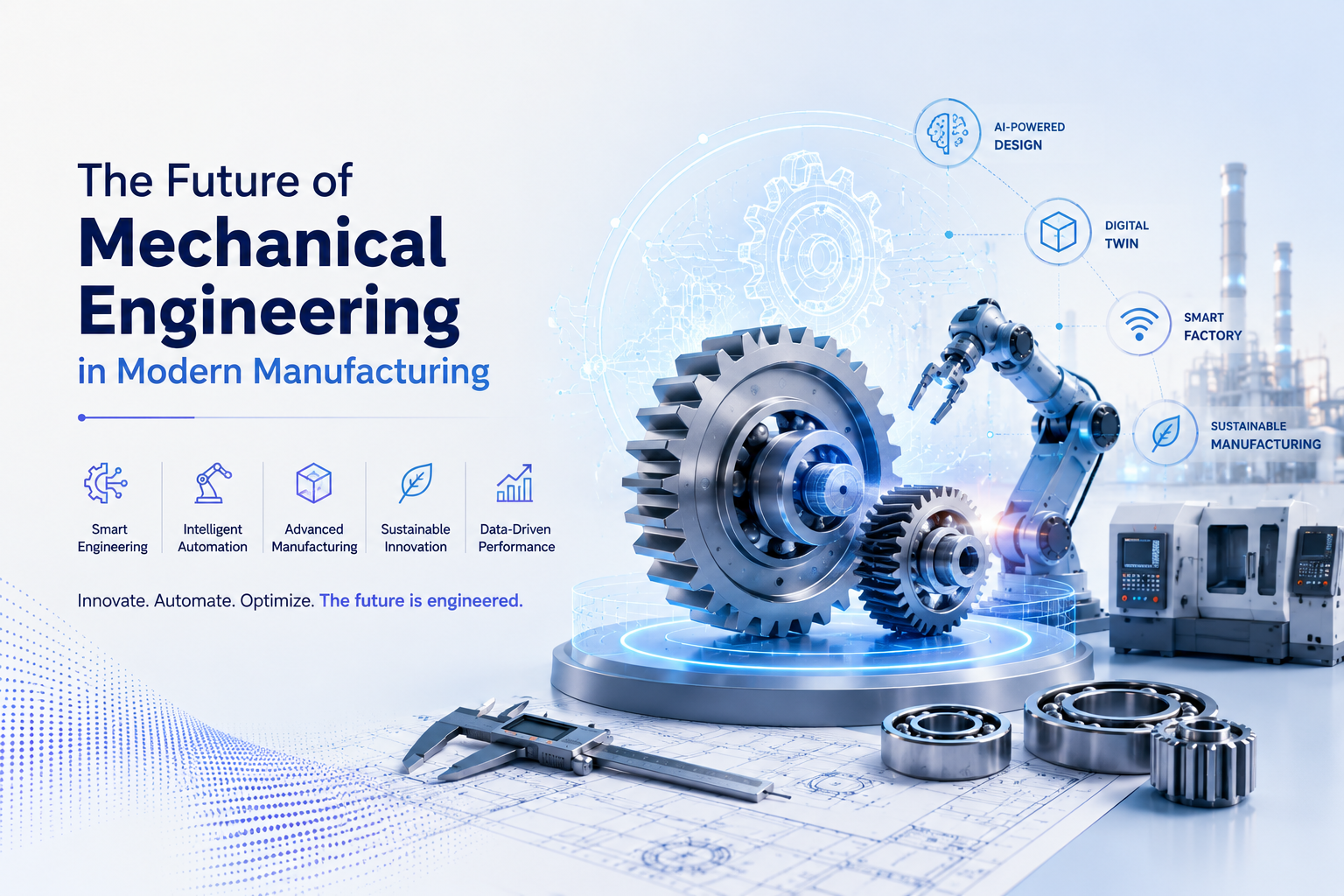
Mechanical engineering is rapidly evolving beyond traditional machine design. AI, digital twins, robotics, and smart manufacturing are transforming how products are designed, built, and maintained.
🚀 Why Mechanical Engineering Is Changing
For decades, mechanical engineering focused primarily on designing reliable machines and improving manufacturing processes. While those fundamentals remain important, today's manufacturers face entirely new challenges—shorter product cycles, rising production costs, skilled labor shortages, sustainability goals, and increasing customer expectations.
As a result, mechanical engineering is becoming more digital, connected, and data-driven than ever before.
🔑 Key Technologies Shaping the Future
TechnologyImpact🤖 Artificial IntelligenceOptimizes product design and predicts machine failures🏭 Smart ManufacturingConnects machines, people, and production data🔄 Digital TwinsSimulates factories and machines before implementation🖨️ Additive ManufacturingEnables rapid prototyping and customized production📊 Industrial IoTCollects real-time operational data from equipment🤖 Robotics & AutomationImproves productivity, consistency, and workplace safety⚙️ From Traditional Engineering to Intelligent Engineering
Mechanical engineers are no longer responsible only for machine design.
Today's role includes:
Designing automated production systems
Working with robotics and collaborative robots
Using AI-assisted CAD and simulation tools
Improving manufacturing efficiency through data
Optimizing production costs
Supporting predictive maintenance strategies
Collaborating with software, electronics, and automation teams
Engineering has become multidisciplinary.
📈 Benefits for Manufacturers
Companies adopting modern mechanical engineering practices are seeing measurable improvements.
✅ Higher production efficiency
✅ Reduced machine downtime
✅ Better product quality
✅ Faster product development
✅ Lower manufacturing costs
✅ Improved energy efficiency
✅ Greater production flexibility
🌱 Sustainability Is Now an Engineering Goal
Modern engineering isn't just about making machines faster.
Manufacturers increasingly expect engineers to design products and production systems that:
Consume less energy
Reduce material waste
Improve recyclability
Lower carbon emissions
Extend equipment lifespan
Sustainability is becoming a competitive advantage rather than a compliance requirement.
🔗 Better Engineering Starts with Better Sourcing
Even the best product design depends on the right manufacturing partners and components.
Engineering teams now work closely with procurement teams to identify suppliers capable of delivering:
Precision-machined components
Custom fabrication
Specialized materials
Bearings, gears, motors, and mechanical assemblies
CNC manufacturing
OEM and contract manufacturing services
Digital sourcing platforms make discovering qualified suppliers significantly faster, reducing delays during product development.
📌 Looking Ahead
Mechanical engineering is entering one of its most exciting phases. Technologies such as AI, digital twins, Industrial IoT, and advanced automation are redefining how products move from concept to production.
The engineers and manufacturers that embrace these innovations today will be better positioned to improve quality, reduce costs, accelerate product development, and remain competitive in the era of Industry 4.0.
💡 Final Thoughts
Mechanical engineering will always be at the heart of manufacturing. The difference is that tomorrow's engineers will combine traditional mechanical expertise with software, automation, and data-driven decision-making.
Organizations that invest in these capabilities today will shape the factories of the future.